Faux Books: A Practical Guide to Finishing a Room
2 September 2026 • By Kamil Safulak, Antykwariat Polski
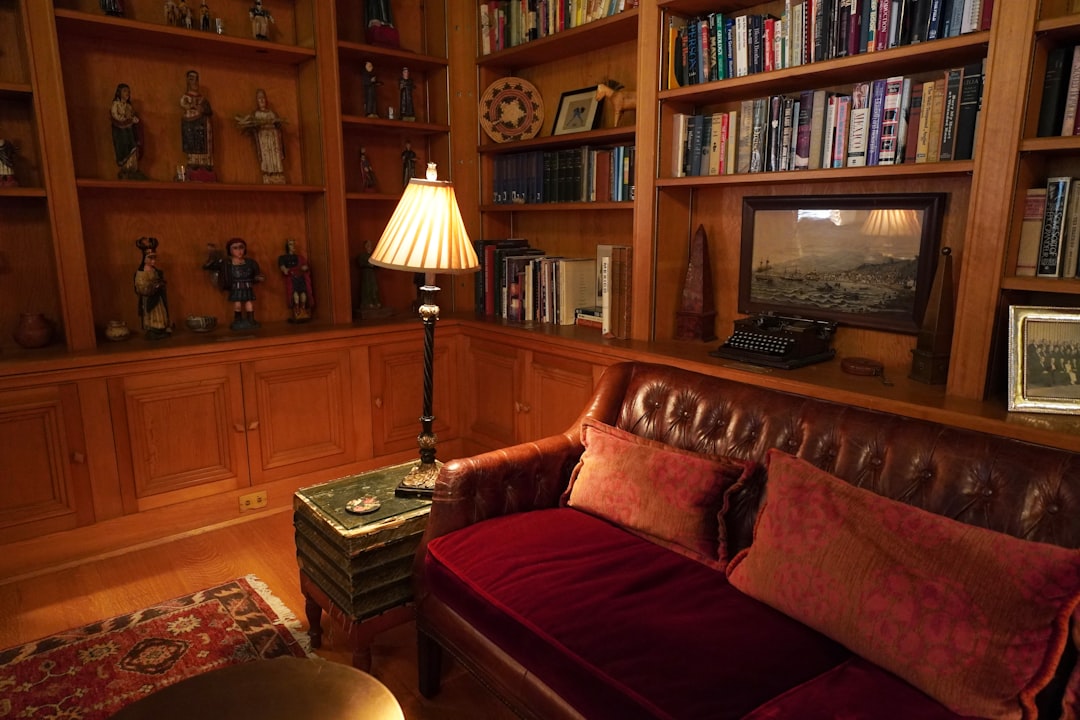 Photo by Brett Wharton on Unsplash
Every interior designer knows the moment: the architecture is resolved, the furniture plan is signed off, the joinery is built - and yet a run of open shelving or a study wall still reads as unfinished. This is precisely the gap that faux books were designed to close. Used correctly, they are not a decorative afterthought but a finishing material, closer in function to trim or upholstery than to a prop.
This guide covers how to think about faux books as a specification-level product, when to use them, and how to integrate them into a project without the result reading as staged.
Why faux books solve a real styling problem
Empty or half-filled shelving is one of the most common unresolved elements in residential and hospitality interiors. Clients rarely own enough physical books to fill a wall of built-ins, and even when they do, the colours, spines and proportions are inconsistent with the palette of the room. Faux books address this directly: they are produced to a controlled colour story, height and spine width, so a shelf reads as composed rather than accidental.
For architects and designers, this matters at the specification stage. A bookshelf wall can be treated the same way as a stone slab or a fabric run - ordered to match a mood board, rather than left to whatever the client happens to own.
Where faux book installations fit in the design process
Faux book installations for interior design work best when they are planned alongside the joinery, not added after installation. Shelf depth, spacing between shelves, and lighting all affect which product format makes sense. A shallow niche might call for spines mounted on a panel, while a deeper library wall can accommodate genuine three-dimensional boxes that hold their form under handling and dusting.
Designers working on built-in libraries often mix formats deliberately: real books and personal objects on the lower, more accessible shelves, with faux volumes filling the upper runs that are rarely reached. This approach is covered in more depth in A Built-In Bookshelf Styling Guide for Interior Designers, but the underlying principle is simple: faux books carry the visual weight, while a smaller number of genuine objects carry the authenticity.
Specifying colour, texture and binding for a finished look
The difference between a convincing installation and an obviously artificial one comes down to material choice, not quantity. Leather-bound spines with varied tooling, aged edges and irregular heights read as a collection assembled over decades. Uniform, glossy spines in matching sizes read as stage props, even from a distance.
When briefing a supplier, it helps to specify a palette rather than a single colour - three or four leather tones with slightly different spine widths will always look more credible than a single repeated block. Gold or blind tooling on the spine, kept understated, adds enough detail to survive close inspection without drawing attention to itself. For designers who want a reference point for how these variables are catalogued, a styling catalogue of finishes is a useful starting point before writing a brief.
Library styling for different project types
The right approach to library styling depends heavily on the use of the room. In a private residence, a slightly irregular, lived-in arrangement usually suits the brief - mismatched heights, occasional gaps, a stack laid horizontally. In hospitality or corporate interiors, a more disciplined, symmetrical arrangement often reads as more appropriate to the setting, particularly where the shelving is a backdrop rather than a focal point.
It is also worth considering maintenance and durability at the specification stage. Faux books used in high-traffic areas, reception desks or conference rooms need a construction that tolerates handling and occasional cleaning, not just visual accuracy. This is one reason it is worth discussing construction method - panel-mounted spines versus freestanding boxes - directly with the fabricator rather than choosing on appearance alone.
Finally, treat faux books as part of the broader materials palette of the room, not an isolated purchase. Matching spine tones to wood finishes, metal hardware or wall colour will do more for the finished result than any single styling trick applied afterward.
Contact us to discuss a bespoke project, or browse our library arrangements and styling catalogue.