Custom Book Installations vs Off-the-Shelf Decorative Books: A Case Study
31 August 2026 • By Kamil Safulak, Antykwariat Polski
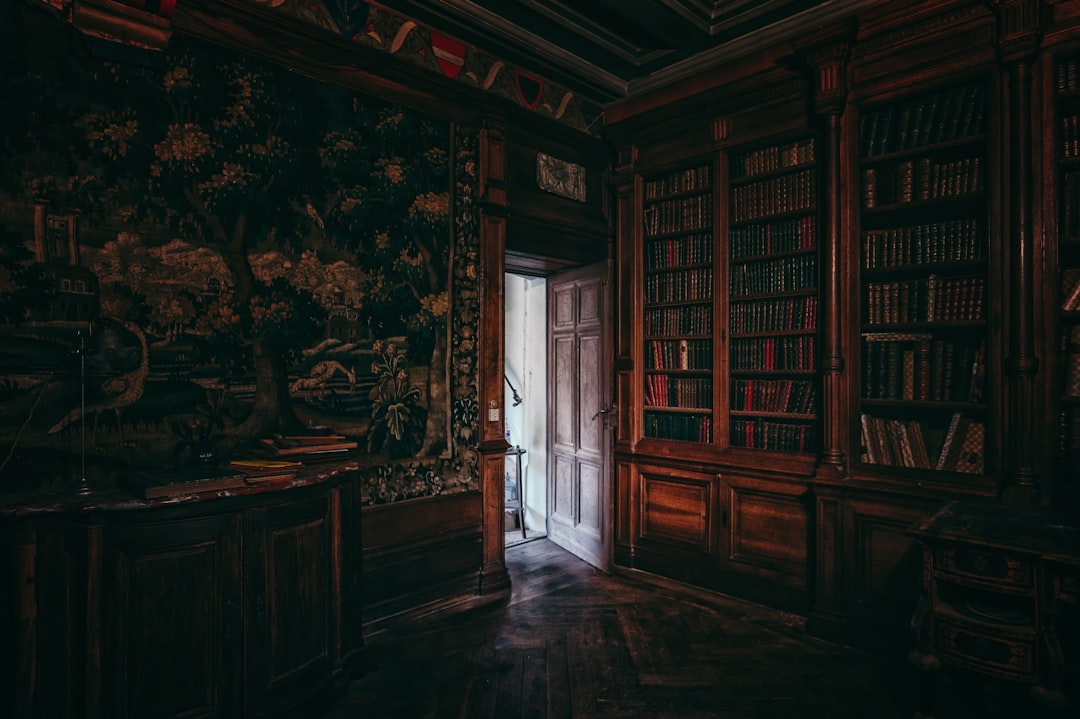 Photo by Peter Herrmann on Unsplash
A residential design studio in Warsaw recently came to us with a familiar brief: a double-height library wall in a private apartment, roughly fourteen linear metres of shelving, and a client who wanted the room to feel collected rather than staged. The studio had already sourced a batch of generic decorative books from an online supplier as a stopgap. The result, in their words, looked 'fine from across the room and wrong up close.' This is the scenario that best illustrates the practical difference between off-the-shelf decorative books and a custom book installation, and why the choice matters more than it first appears.
Off-the-shelf decorative books are manufactured in fixed dimensions, fixed colour palettes, and repeating patterns. They are genuinely useful for fast-turnaround projects, staging, or budget-conscious commercial spaces where the shelving itself is not architecturally prominent. But when a shelf wall becomes a focal point - as it did in this apartment, flanking a fireplace and visible from the entry - repetition becomes obvious. Spines repeat every eight or ten volumes, spacing is uniform, and the colour story rarely matches the room's actual material palette: the brass fittings, the plaster tone, the upholstery.
Reframing the Brief Around the Shelf, Not the Books
Our first step was to survey the shelving itself: bay widths, shelf depths, sightlines from the seating area, and the natural and artificial light hitting the wall at different times of day. This is the part of the process that off-the-shelf sourcing skips entirely, because generic decorative books are designed to fit a shelf, not to complete a room. A custom book installation starts from the architecture outward - the spines are sized, coloured, and grouped in direct response to the bay proportions and the surrounding finishes.
For this project, we proposed a mixed approach rather than a single product type. The lower shelves, at eye level and within reach, used genuine cloth and leather bindings styled as arrangements of real and replica volumes, so the client could still pull a book down if they wished. The upper shelves, largely out of reach and lit from a skylight, used lighter three-dimensional volumes to reduce visual weight and keep the top of the wall from feeling dense.
Where Decorative Books Earn Their Place
It's worth being direct about this: decorative books are not a compromise when specified correctly. They solve a real problem that real books create - inconsistent spine heights, mismatched colours, gaps left by a client's actual reading habits, and the sheer weight load of filling large runs of shelving with hardcovers. The issue in this apartment was never that decorative books were used. It was that they were selected without reference to the room. A bespoke book decor approach uses the same category of product but treats colour-matching, spine density, and grouping rhythm as design variables, the same way a designer would treat pillow fabric or cabinet hardware.
We built the palette from three reference points the studio gave us: the plaster wall tone, a smoked oak on the joinery, and a single antique brass fixture the client wanted echoed. From there we grouped spines into loose colour blocks rather than rigid rows, staggered heights by a few centimetres per bay, and left intentional negative space on two shelves for objects the client already owned. None of this is possible with a boxed set ordered sight unseen.
From Mock-Up to Installation
Before production, we sent the studio a bay-by-bay layout so they could sign off on colour distribution and density before anything was manufactured. This step matters for architects working on commercial timelines especially, since it removes the guesswork that comes with ordering fixed sets and hoping they read correctly once installed. Installation itself took a fraction of the time the sourcing and specification phase did, which is typical - the craft is front-loaded into planning, not assembly.
The finished wall reads as a single, considered collection rather than a shelf dressed for photographs. That distinction is really the whole argument for custom book installations over generic stock: both are decorative books in the technical sense, but only one is designed to belong in the room it occupies.
Contact us to discuss a bespoke project, or browse our library arrangements and styling catalogue.